
How to get rid of rats permanently becomes a concern when control methods seem effective at first but fail to deliver lasting results. In most cases, the limitation is not the method itself, but how rodents respond to it. Rats are highly adaptive to their environment, and once they are exposed to control measures, their behaviour begins to change. Unless strategies account for this shift, the problem tends to continue in less visible ways. Understanding these behavioural adjustments is key to achieving long-term control.
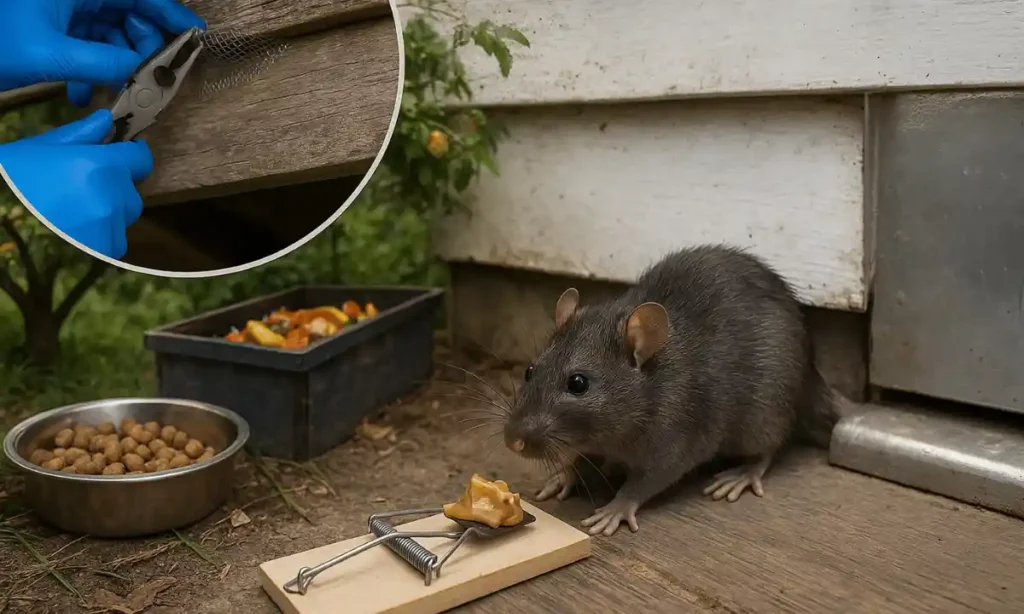
Rodent activity often continues because control efforts are focused on visible signs rather than underlying movement patterns. While traps or bait may reduce activity in certain areas, they do not always address how rodents are navigating the space.
Rats typically move through concealed pathways, within walls, ceilings, and service lines, where they remain largely undetected. These routes allow them to avoid exposure and continue accessing food and shelter without interruption. When treatment is applied only in accessible areas, a portion of the population remains active within these hidden zones.
As a result, the issue appears controlled temporarily but resurfaces over time. This is one of the key reasons why attempts at how to get rid of rats permanently often fall short.
Rodents respond to repeated exposure by changing how they interact with their surroundings. This directly affects the effectiveness of commonly used methods.
These behavioural patterns highlight why, how to get rid of rats permanently requires more than repeating the same control methods.
Sustainable control depends on aligning the approach with how rodents interact with their environment.
Rodent issues rarely remain limited to what is visible, and delaying structured intervention often allows the problem to develop further.
Professional teams offering rodent control service in Sharjah bring a more systematic approach by identifying hidden activity, understanding movement patterns, and applying targeted solutions that go beyond surface level control. This reduces repeated efforts and ensures that the issue is addressed more completely.
Working with experienced providers like Al Atta Pest Control ensures that how to get rid of rats permanently is approached with a method that focuses on long-term effectiveness rather than short-term relief.
Because hidden access points and activity areas remain active if not fully addressed.
Yes, they adapt their behaviour based on previous exposure, which reduces effectiveness over time.
A structured approach that includes inspection, targeted methods, and ongoing monitoring.
Effective rodent control depends on understanding behaviour, not just responding to visible activity. When control methods are aligned with how rodents move and adapt, the results become more consistent and long-lasting. At Al Atta Pest Control, the focus is on delivering this structured approach, ensuring that how to get rid of rats permanently is managed with precision and continuity.
WhatsApp us