Soil treatment for termites is the first line of defence against structural damage that often begins before a building is complete. Termites travel underground and go unnoticed until serious harm is done. Applying a chemical barrier at the right construction stage is far more effective than reactive treatment later — and in Sharjah, it is a legal requirement. This guide explains how it works, what chemicals are used, and how to stay compliant
Why Soil Treatment Works Best Before Construction
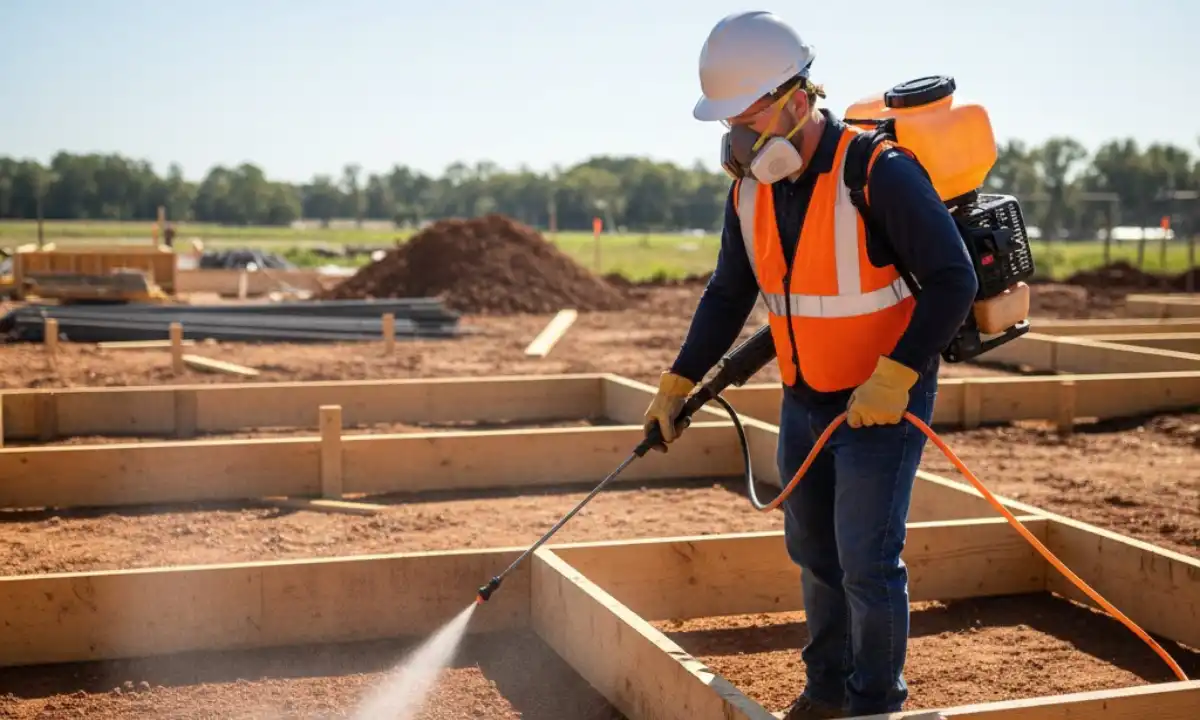
Pre-construction soil treatment forms a protective chemical layer directly beneath and around the foundation before the slab is poured. It eliminates existing colonies in the soil, blocks underground termite pathways, and creates a barrier that remains active for years. Once the slab is in place, this level of full-coverage protection can never be replicated.
Pre-Construction vs Post-Construction: Key Differences
| Factor | Pre-construction | Post-construction |
|---|---|---|
| Timing | Before foundation is laid | After building is complete |
| Coverage | Full sub-slab barrier — most thorough | Targeted — gaps likely |
| Cost | Lower — planned single treatment | Higher — reactive + possible repairs |
| Effectiveness | Highest | Moderate |
| Municipality | Mandatory for new builds in Sharjah | Required on detection or by contract |
Chemicals Used and UAE Approval Status
All termiticides used in the UAE must be registered with the Ministry of Climate Change and Environment (MOCCAE). Al Atta uses only approved, professional-grade products:
| Chemical | Type | How it works | UAE status |
|---|---|---|---|
| Imidacloprid | Non-repellent | Transfers colony-wide via contact | MOCCAE approved |
| Fipronil | Non-repellent | Slow-acting; disrupts nervous system | MOCCAE approved |
| Bifenthrin | Repellent | Fast-acting barrier; termites avoid treated soil | MOCCAE approved |
Soil Treatment Phases
Phase 1 — Site Assessment: Soil type, drainage, and existing termite activity are evaluated to select the right chemical and dosage.
Phase 2 — Sub-Slab Treatment: Termiticide is evenly drenched across the full building footprint before the concrete slab is poured. This is the most critical phase.
Phase 3 — Foundation & Backfill: Backfilled soil around foundation walls is treated layer by layer, forming a vertical perimeter barrier.
Phase 4 — Perimeter Treatment: A final application is made around the external edges of the completed structure to close any remaining gaps.
Phase 5 — Compliance Documentation: A treatment certificate is issued for submission to Sharjah Municipality as part of building handover.
Cost and How Long It Lasts
Treatment duration depends on the chemical used. Imidacloprid and Fipronil typically remain active for 5–10 years; Bifenthrin for 3–5 years. Annual inspections are recommended to confirm barrier integrity. Cost varies based on plot size, soil conditions, chemical choice, and number of phases required. Al Atta provides detailed quotes after a site assessment, with full transparency on coverage, product, and protection duration.
Sharjah Municipality Compliance
Anti-termite soil treatment is legally mandatory for new construction in Sharjah. Requirements include:
- Treatment by a Municipality-approved pest control company
- Use of MOCCAE-registered termiticides only
- Submission of a treatment completion certificate before the building handover
- A valid annual anti-termite maintenance contract
- Documented inspections available for Municipality review
Al Atta is a Sharjah Municipality-approved provider and manages the full compliance process, from treatment to certificate issuance.
FAQs
Is soil treatment required before construction in Sharjah?
Yes. Sharjah Municipality mandates anti-termite soil treatment as part of building approval. A completion certificate from an approved company must be submitted before handover, and an annual maintenance contract is required.
How long does anti-termite soil treatment last?
Between 5 and 10 years depending on the product. Fipronil and Imidacloprid offer the longest protection. Annual inspections confirm the barrier remains intact, especially where nearby construction or irrigation may have disturbed the soil.
What chemicals are used in termite soil treatment in UAE?
The most common MOCCAE-approved termiticides are Imidacloprid, Fipronil, and Bifenthrin. Non-repellent options (Imidacloprid and Fipronil) are preferred for pre-construction use as they spread through the colony on contact, while Bifenthrin acts as a fast-acting repellent barrier.
What is soil treatment for termites?
It is the application of a liquid termiticide beneath and around a building’s foundation to create a chemical barrier that prevents termites from reaching the structure through the soil. It is most effective and most economical when applied before construction begins.
Is soil treatment necessary before construction?
Yes — both legally and practically. Pre-construction is the only stage that allows complete sub-slab coverage. Post-construction treatment is more disruptive, less thorough, and significantly more expensive.
Summing Up
Soil treatment for termites lays the groundwork for a safer, more durable structure by addressing risks before they surface. From choosing the right MOCCAE-approved chemical to meeting all Sharjah Municipality requirements, every phase matters. For reliable termite control service in Sharjah, partnering with Al Atta Pest Control ensures the process is handled with precision, full compliance, and long-term effectiveness.